
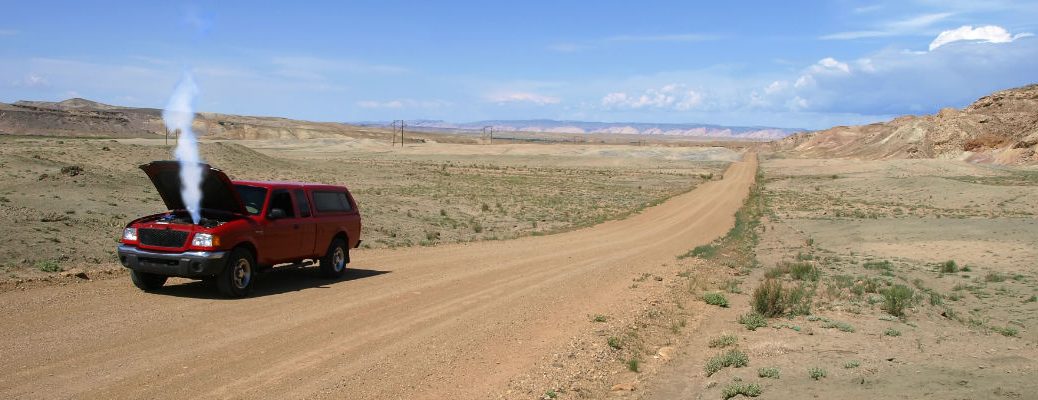
Why does my truck overheat in the winter?
The average low temperature in Bozeman for the month of January is 14 degrees. When it’s this cold outside, the last thing you would think you need to worry about is a vehicle getting too hot. If your car, truck or SUV has an internal combustion engine, it makes heat and that heat needs to be dealt with in the proper manner. If you have been struggling with trying to figure out why your truck overheats in the winter, Billion Auto Group might have some answers for you. Like almost anything regarding vehicle maintenance, it all comes down to staying ahead of potential problems. Let’s get into this a little bit and see if we can help you find an answer.
READ MORE: How do I know if my transmission is going bad?
What causes overheating?
Without trying to get too reductive in our reasoning, overheating is caused by the ineffectiveness of a vehicle’s cooling system. Coolant is supposed to freely flow through coolant passages and dissipate heat caused by friction and combustion. That now hot coolant goes to the radiator where passing air sucks the heat out of it and it goes back to work.
If your car, truck or SUV starts to get too hot, there are two likely causes.
You have a leak — If there is a leak in the cooling system, there won’t be enough coolant passing through where it needs to be and it won’t dissipate enough heat.
Broken thermostat — The thermostat is a very critical component in the cooling process. If it’s broken or otherwise malfunctioning, your engine will be prone to getting too hot.
What should I do if my truck overheats?
If you notice your truck starting to overheat, it is important to act quickly to prevent extensive (read: expensive) damage. Before you do anything, make sure you are able to pull over safely before doing anything else.
Shut it down — This should be pretty obvious. But after getting out of the way, it’s important to turn the vehicle off before things get worse.
Be open about it — Pop the hood open as quickly as possible. Getting air to the engine will help cool things down. This is where a cold day could be useful. DO NOT REMOVE THE RADIATOR CAP!
Bringing your vehicle in for regular maintenance will help you stay ahead of problems or at least catch small ones before they become big ones. If you haven’t had an oil change or your coolant replaced for a while, make an appointment with the Billion Auto Group Service Department today.
I agree with the fact that lack of adequate amount of coolant could cause the overheating of engine. Coolant absorbs the extreme heat generated by the engine, hence ensure smoother performance of the engine. If coolant level is reducing, the cause behind it should be identified and if there is any pinhole, then it should be immediately repaired. Coolant level should be inspected regularly and if necessary should be replaced.
Overheating occurs in winter due to a deficiency that occurs in a vehicle’s cooling system. Most common faults are coolant leaks or a blocked thermostat. Coolant passes through the engine’s coolant passages, as it does the heat that is produced by friction and combustion in to the engine and it is transferred in to the coolant. The coolant then travels to the radiator where the heat is dissipated by air that is passing through the radiator. When a leak occurs and the cooling system becomes very low, the coolant is not able to passes through the engine’s coolant passage. The causes of overheating in a car is you have a leak in your car, broken thermostat. The thermostat is a very critical component in the cooling process. If it is broken or otherwise malfunctioning, your engine will be prone to getting too hot.
I am glad to know that leakage of coolant could lead to the engine overheating even if it’s cold outside. Coolant plays a vital role in the cooling system by keeping the temperature of the engine at an optimum level. So, prior to leaving for a destination, the condition of different components of the cooling system needs to be inspected including the coolant used in the vehicle. Apart from this, coolant flush could be very helpful to enhance the efficiency of the cooling system.
Some people thoughts that only extremely hot temperature of the summer is responsible for the overheating of the engine. However, the engine itself generate a lot of energy in the form of heat which is more than enough energy required for the engine overheating. The cooling system absorbs such excess amount of heat energy generated by the engine and keeps it in working order. So, mechanical issues associated with the cooling system of the vehicle should be identified and fixed in time to prevent the engine overheating. For more info, visit https://www.revolutionautomotiveservices.com/cooling-system-service/
A collapsing radiator hose is usually caused by vacuum and is a sign of cooling system blockage or a bad radiator cap. i have also faced this issue with my Peugeot 508 GT Line